Feeds:
Posts
Comments

Archive for the ‘Traditional Foodways’ Category

Photo by Tina Vance

Photo by Tina Vance

You’ve heard of The French Connection, well I’ve got a pig connection. A friend belongs to a meat CSA and they’ve got too much offal for their members. (Hmm, that sounds vaguely obscene, doesn’t it?) Anyway, I’ll be receiving some pigs’ livers, hearts, kidneys and maybe even half a head.

I’m currently scouring my cookbook collection for ideas. Thank goodness for Fergus Henderson, Madeleine Kamman, Jennifer McLagan, Darina Allen, and the rest of the motley crew I’ve assembled over the years.

I’m thinking most definitely of some sort of paté, which will be a first for me, but I’d like to try some other things too. If you’ve got any recipes that would work well with these items please pipe up in the comments. I’ll do some cooking this weekend and post the results here next week.

Read Full Post »

Photo by Flickr User Soliloquy

Photo by Flickr User Soliloquy

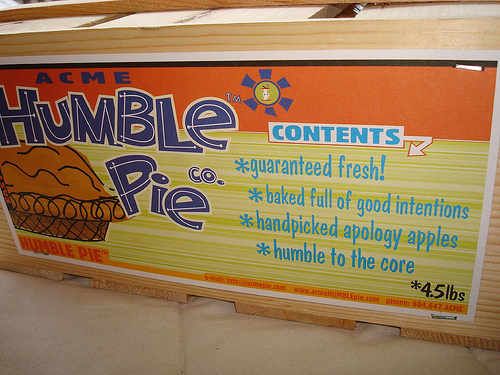
My mother always told me never to serve a dish to others that you haven’t made at least once before. But really, who listens to their mother? I’ve been flouting that rule with success for years now, pulling off complex dishes at dinner parties from recipes discovered mere days earlier.

The ancient Greeks had a word for this behavior: hubris. A word derived from another classical language will figure prominently in this story as well: disaster, or literally something that is not in the stars.

I was supposed to bake something for an event. A friend gave me a family recipe, which went perfectly with the theme of the event. As with many family recipes, it was written somewhat cryptically. However, my friend had baked this very thing a few days before and invited me over to sample it. We had a nice long discussion about the oral history of recipes and how important it is to follow your elderly relatives around the kitchen with a measuring cup, pad and pencil to record these family heirlooms.

The day of the event was one of those when everything took longer than it should. Time just got away from me. I should have seen it slipping away but I was busy flouting the rules.

I called my friend when I was halfway through adding the flour and somehow things weren’t looking right. It turns out I had misunderstood the yield of the recipe; I thought I was making two baked items. The yield was for four. Ah well, I thought, I’ll just make something else out of the leftover dough tomorrow.

By the time I was done kneading (yes, this is yeast baking if you must know), it was much later than it should have been. I put the bowl of dough into the oven with the pilot light so it could rise.

It being one of those days, there was an errand that really could not wait. So off I ran while the dough rose.

When I got home, it was about an hour and a half before I had to leave for the event. The dough had only risen a little. I put it back in the oven with the pilot light, knowing from experience that sometimes it takes a bit of time to get going and it rises more quickly later.

I stood in the kitchen, coming to terms with the cold digital reality that I didn’t have enough time to make the fruit component of the dish from the lovely New York State apples I had purchased that morning. With a sense of creeping doom I considered my options.

The previous day, my friend and I had talked about the progression of family recipes through the generations. According to family lore, her great-grandmother had made the fruit part of this dish by hand from whatever fruit was in season. Her grandmother had used canned fruit filling. We both agreed that there was no shame in this. When these modern conveniences arrived on the scene housework was a lot more physical than it is now and women were thankful for one less thing to do as they hung the laundry on the line, kept the toddler from burning herself on the stove, and scolded the dog for digging up the garden again.

A light went on in my mind. If I used canned filling, I just might be able to get it baked in time for the event and it would be “authentic,” for some value of that overused word.

Leaving the finicky dough rising in the oven, I rushed out once more to the store to buy canned fruit pie filling.

When I got back I had about an hour of time left. I knew that I needed to bake for about 15-20 minutes and then cool for 15 minutes before I could leave the house. But, the dough was supposed to rise twice. There was no way I could allow it to do that. I had baked sweet yeast breads before (well, once). If I punched it down, then fitted the dough to the pan, added the fruit, and then allowed it to rise for another 15 minutes or so while the oven heated up, that would work, wouldn’t it? Come on, I reasoned, people like my friend’s grandma made these things all the time while doing six other things (see above). It must be pretty hard to screw up, and I’ve pulled off much more complicated dishes than this, right?

Wrong.

I pulled it out of the oven with about 15 minutes to spare. The edges were brown and lovely, but the apartment didn’t really fill with that fabulous baking, fruity aroma we all know so well. I briefly thought there might be something wrong, but shoved it to the back of my mind as I put the pan on the cooling rack.

In jacket and scarf, I put the still-warm pan on a piece of cardboard so I could carry it on the subway without burning myself and wrapped it all in aluminum foil.

Surrounded by rush hour commuters, I sat smugly on the uptown train thinking, “I’ll bet no one else’s dish will still be warm when it arrives at the event.”

Those whom the gods would destroy, they first make mad with power.

When I unwrapped the item in the kitchen at the event site — and thank those gods mentioned above for that kitchen; more on that later — I discovered little blobs of what looked like butter had risen to the surface. I mentioned it to a colleague in the kitchen and she said, “well, you know what Julia Child used to say about butter…” and we laughed. Upon further examination, the blobs turned out to be pieces of uncooked dough that had risen to the top. I decided to cut a piece and make sure everything was alright. Well, that was the best thing I ever did. It was severely undercooked; beneath the fruit, the dough was slimy and wet. My colleague nodded gravely at the diagnosis.

My mind scrambling, I said, “I’ll put it in the oven and finish it off.” (Thank the gods for that kitchen!) My compatriots were very kind. Cooks everywhere know that sinking feeling when it all starts to go wrong, and so we try to help each other out.

In the main space, the event was beginning. I situated myself in the last row so I could nip off to the kitchen every once in a while and check the progress of the baking. By the end of the event, it was basically cooked. Warily, I put it out on the table with the other offerings, knowing from past experience that people stop at the food table both before and after these events. Unfortunately (or fortunately, depending on how you look at it) the event had run long, and as soon as it was done, everyone rushed to clean up the food table and the kitchen and get out of there.

One person saw my dish and said, “Oh, I didn’t get to try any of that.” and I wryly replied, “That’s because it wasn’t cooked yet.”

Our story ends with me riding home in a mostly empty subway car, holding the same full pan and hoping its contents might be good enough to eat for breakfast. The very portrait of hubris.

I’ve got a whole bunch of dough in the fridge. This time, I’ll definitely let it rise twice — and I just might test it before I try serving it to others. Maybe.

Read Full Post »
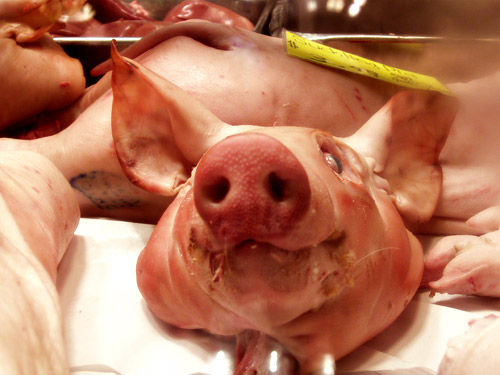
Photo by Lauren Weinhold

Photo by Lauren Weinhold

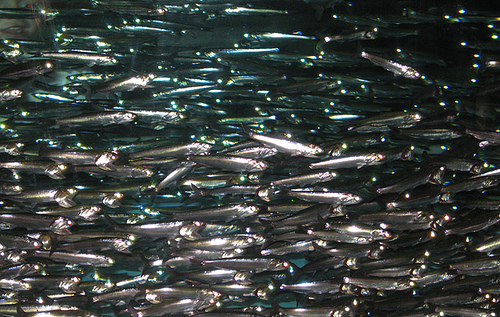
Sorry anchovies, it’s not you, it’s me. You’re just too intensely fishy for me. I don’t like rejecting foods. Unlike some eaters, I always try something before deciding I don’t like it. I had tried anchovies multiple times and I just couldn’t make it work.

However, as is often true, I was wrong, and I have Marcella Hazan to thank for setting me straight. In her book Essentials of Classic Italian Cooking, she waxes rhapsodic about the little fish for an entire page in the “Fundamentals” section, saying that no other ingredient in Italian cooking “produces a headier flavor.” She also warns readers against buying cheap anchovies, saying that these “mealy, salt-drenched” things are what give anchovies a bad name.

Ah, so that’s it then, I’d just never had good anchovies. This rang true for me because the same thing had happened with olives. Growing up in 1970s upstate New York the only olives I ever had came from a can, so I thought I didn’t like olives. Then I moved to New York City and discovered real olives in their myriad flavors and colors. Maybe the same was true of anchovies?

Marcella recommends whole anchovies packed in salt, which you can easily fillet yourself at home. I decided to find the best anchovies I could and go from there. A very informative article by Ari Weinzweig on The Atlantic web site, recommended Ortiz anchovies from northern Spain as being of the highest quality. He also extolled the superiority of whole fish over fillets, saying they were larger and meatier.

I found some Ortiz anchovies at a local gourmet store but almost dropped them on the floor when I found out the price. Even the manager was surprised, it being a new item. I’m not a cheapskate when it comes to food, but they were three times the price of the regular kind. Also, they appeared to be fillets instead of whole fish and were packed in olive oil.

A few days later, I was exploring the newly opened Bklyn Larder and spied a large jar of salt packed whole anchovies from an Italian company called Nettuno. This is exactly what Marcella recommends and better yet, the price per gram was the same as the regular ones I used to buy.

Soon thereafter, I was pondering what to make for dinner using the last of our weekly farmers’ market haul, a large head of broccoli. I stood in front of the cookbook shelves pulling out volumes at random looking for broccoli in the index. Behold, Marcella to the rescue with Broccoli and Anchovy Sauce for pasta. Perfect, I could use our broccoli and test out the new anchovies.

Marcella’s Broccoli and Anchovy Sauce is similar to a Bagna Càuda in that the anchovies are gently dissolved in olive oil which is warmed over a double boiler. This is then mixed with boiled broccoli and some crushed red pepper flakes (she actually calls for chopped hot red chili peppers but I was in a hurry).

The result is a sauce with a very light body but an incredibly rich — and not too fishy! — flavor. The anchovies rumble at the bottom like timpani in the orchestra, providing the bass note to the whole dish.

Broccoli and Anchovy Sauce for Pasta

adapted from Marcella Hazan

Serves 2

To fillet your own salt packed anchovies: Wash the salt off the anchovies, then pull the fish apart lengthwise into two parts (they come apart very easily). Next grab the spine at the tail end and lift it away from the flesh. All the bones come with it in one piece and you are left with 2 anchovy fillets. Done!

1 large bunch of broccoli, about 1 pound
1/3 cup olive oil
6 anchovy fillets (preferably from whole anchovies packed in salt), chopped fine
1 tablespoon crushed red pepper flakes, or to taste
1/2 pound of short pasta such as orecchiette or fusilli
1/4 cup freshly grated parmigiano-reggiano cheese

Chop off about 1/2 inch of the tough woody end of the broccoli and discard. Cut the broccoli florets away from the stalks. Peel away the tough outer layer of the stalks with a vegetable peeler. Put both the stalks and the florets in a pot of boiling salted water for 3-4 minutes or until just tender to the fork.

Drain the broccoli, break the florets into bite-sized pieces and chop the stalks in a large dice.

At this point put the salted water on to boil for your pasta and cook it to the firmness you prefer.

As your pasta cooks, fill a large saucepan about 1/4 full with water and bring to a simmer. Put the olive oil in a medium sauce pan and heat it briefly over a low burner. Then take the medium saucepan and put it inside the large saucepan, double boiler style. Add the anchovies to the oil. Mash the anchovies with a wooden spoon until they dissolve completely in the olive oil.

Remove the medium saucepan from the double boiler and place it on a medium-low burner. Add the cooked broccoli florets, chopped stalks and crushed red pepper flakes. Cook for 4-5 minutes stirring to coat well.

When your pasta is cooked, drain it and toss with the broccoli anchovy sauce, then add the grated parmigiano-reggiano, toss again and serve.

Read Full Post »

Photo by msiew

Photo by msiew

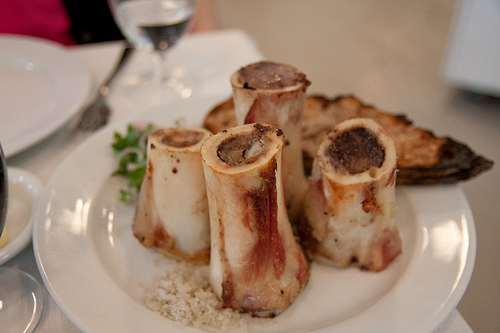
Let’s face it, bones can be inconvenient. In these days of ultra processed food, people have become accustomed to eating food that goes from the freezer, to the microwave, to their stomachs without much pause in between. Also, a large number of American meals are taken in the car, another place where bones are just a nuisance.

After a while, if that’s how you eat, then that becomes how you cook (skinless, boneless chicken breast anyone?) and then the knowledge of how to cook meat on the bone disappears from our society. Please don’t let that happen.

So what are the benefits of food on the bone? First, and most important is flavor. The bones provide collagen, which gives a depth of flavor and satisfying mouth-feel to the dish. The meat closest to the bone tastes different (some say sweeter) because it has more collagen in it. Bones also slow you down. You can’t just gobble your food down in three bites if you have to deal with bones. Studies have shown that eating slowly can help with weight loss. There is also an economic benefit. If you save the bones from your roast meat you can make stock and stash it away in the freezer for the next time you make soup. Once you’ve made a soup with your own homemade stock you’ll never go back to cans or boxes; it tastes better and it’s cheaper.

Unfortunately, these days it can be difficult to buy meat on the bone. Unless you order in advance from your butcher, most likely all he will have is boneless cuts. Farmers’ markets can be a good source of local, grass fed meat and are more likely to sell cuts on the bone. Recently, I was at the Grand Army Plaza Greenmarket in Brooklyn speaking with the guys at the Arcadian Pastures stand about this very subject. They said they’re never quite sure how to answer the question about bones because some customers really don’t want them and others do. Jokes about the difficulty of raising boneless animals aside, they usually bring both bone-in and boneless cuts of their meats to satisfy as many customers as possible.

Next time you’re thinking of having roast beast, try to get it on the bone. It’s worth having to order in advance or going to an unfamiliar store (who knows what else you may discover there).

Read Full Post »

I finally found some open WiFi here in Oxford. You’d think there’d be more in a university town. The term doesn’t start until October so maybe that’s why.

I’ve really been enjoying the history and architecture and this afternoon I’m off to the beginning of the Oxford Sympsium with the fund raising picnic based on the Oxbridge luncheon in Viginia Woolf’s A Room of One’s Own.

Below is a photo of The Angel and Greyhound, a lovely pub where I had some more Real Ale last night. I tried a beer called Iceberg from the Titanic Brewing Company. Cheers!

Read Full Post »

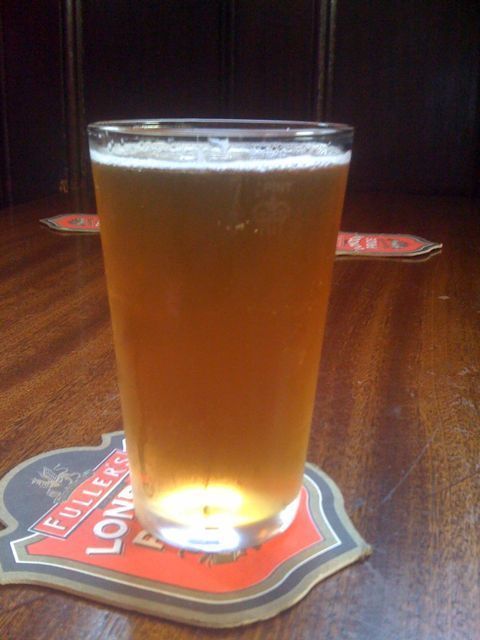
I’m testing the iPhone WordPress app to see if I can post from the road. Here’s a photo of a half pint of Fuller’s Discovery Blonde. I drank this real ale at the Red Lion in Ealing. The pub stands right across the street from the old Ealing Studios and its walls are covered with photos of the actors who used to run across for a pint.

Read Full Post »

a

I like to poke around in the forgotten corners of food history learning what people ate, and how they cooked differently than we do now. Some, like anthropologist Richard Wrangham, say it is cooking that made us human. What better way to learn about people from different places and time periods than by cooking and eating their food? Here I’ll be writing about kitchen experiments with old recipes, preservation and waste prevention techniques of the past, and unfamiliar ingredients. I’ll also include travel pieces exploring the food history of my destinations, and some beginner attempts at food photography.

It’s important that information about traditional foodways not be lost. It can be useful to us today, making our food choices more environmentally friendly, healthier for our bodies and easier on the wallet. Renewed interest in knowing where our food comes from and the resurgence of farmers’ markets and community supported agriculture is making it easier than ever to incorporate these ideas into our daily routines.

I’ve read that in Greece when γιαγιά (that’s grandma in Greek) makes yogurt at home, she doesn’t use a thermometer to tell if it has cooled to the right temperature. Instead she dips her finger in the hot milk and if she can only keep it there for 20 seconds then it’s time to add the starter. These are the kinds of tidbits I hope to unearth and share with my readers.

Thanks for visiting and I hope to see you again soon.

Read Full Post »

« Newer Posts