Feeds:
Posts
Comments

Reading Fuchsia Dunlop’s memoir, Shark’s Fin and Sichuan Pepper: A Sweet-Sour Memory of Eating in China, had me wanting to move to Chengdu and learn Mandarin. I even added a book on learning Chinese to my wish list, really! Unfortunately, at the moment this particular fantasy is not too practical. So I did the next best thing: I cooked up some Dan Dan Noodles.

In addition to relating her adventures as the first westerner to study at the Sichuan Institute of Higher Cuisine in Chengdu, Ms. Dunlop also thoughtfully provides a few recipes (for more, see her two wonderful cookbooks). In particular I was intrigued by the tale of Xie Laoban’s Dan Dan Noodles. Mr. Xie owned a noodle shop near Sichuan University in Chengdu where Ms. Dunlop was studying. She and her fellow students agreed that his were the best Dan Dan Noodles to be had in all of Chengdu. She attempted to wheedle the recipe out of Mr. Xie. Over the course of several years he would drop little hints of ingredients or techniques, but he never truly revealed all the secrets. Slowly the puzzle pieces fit into place and Ms. Dunlop cooked a version for her student friends and they all agreed that she had nailed it.

The story has a bitter-sweet ending. A number of years later Ms. Dunlop returned to Chengdu and immediately sought out her favorite noodle man to show him a copy of her newly published cookbook. She found that his shop, along with a large swath of the surrounding neighborhood, had been torn down by the Chinese government. She was not able to find out where Mr. Xie had gone or if he had opened another shop.

As you may know, Sichuan cuisine has some specialized ingredients which create its unique flavors. In her scholarly Sichuan cookbook Land of Plenty Ms. Dunlop kindly provides a large section on the Sichuanese pantry, with names and descriptions (in English and Chinese) of all the common ingredients used in this complex cuisine. One of the most distinctive ingredients is Sichuan pepper. It’s actually not related to pepper or chiles; it’s the berry of the Prickly-ash tree and has been used in Chinese cooking for thousands of years. It has a delightful citrusy aroma and when eaten it causes a tingling and numbness in the mouth that is intensely pleasurable. When combined with hot chilies it forms the bedrock of many Sichuanese dishes.
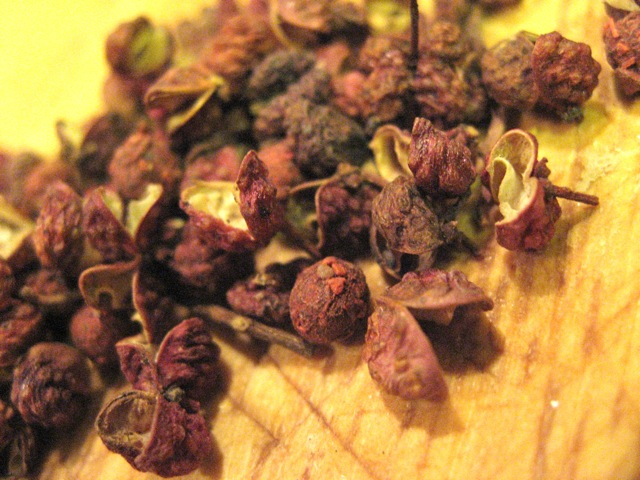
Sichuan pepper

Ms. Dunlop warns that much of the Sichuan pepper available at Asian markets in the US is of poor quality and she recommends several mail order sources. It turns out that one of them, Adriana’s Caravan, is right here in New York City and they allow you to pickup your order in person if you pre-pay over the phone. They had almost all the ingredients I needed for Mr. Xie’s Dan Dan Noodles, and were able to have them ready for me that very afternoon, talk about convenient. Adriana’s Caravan has a huge catalog of spices and specialized ingredients from all over the world and they take good care to order in small amounts, so what you get is nice and fresh. Their Sichuan pepper is a lot more expensive ($36/lb.) than what I’ve seen in Asian markets, but it’s completely worth it. I’ve never experienced this amount of mouth numbing tingle, even at the downtown branch of Grand Sichuan restaurant. I’ll have to cook more recipes soon which feature it, so it doesn’t go stale on me, oh, the hardship!

At this point I only had three ingredients left on my shopping list: ya cai, a variety of Sichuanese pickled mustard greens; dried Sichuan chilies, also called “facing-heaven” chiles because they grow upside down; and fresh Chinese noodles. Helpful members of the online food forum eGullet recommended the Hong Kong Supermarket in Flushing, Queens as being one the best sources for Chinese ingredients in New York City. So I hopped on the Number 7 train and went out to one of the largest Chinatowns in the US.

The Hong Kong Supermarket is located inside of the Hong Kong Plaza on Main St. in Flushing. It’s a large full-service grocery store, complete with fish, meat and produce departments as well as pan-Asian packaged goods from China, India, Japan, Korea, Thailand, and many other places. The fish looked stunningly fresh and the prices were really good, if I lived closer, I’d do all my fish shopping there. The packaged goods are labeled in a wide variety of languages depending upon their origin and, thankfully, some packages also have English on them.

There’s an entire aisle of pickled vegetables, so that’s where I went looking for ya cai. I found a jar labeled “Pickled Mustard” in English, and showed a woman who worked at the market the Chinese characters in Ms. Dunlop’s book, asking if it was the ya cai I was looking for. She shook her head and said what I wanted was in a different part of the store. She led me to the produce department and showed me the fresh bean sprouts (which looked lovely and crunchy). I thanked her and decided to use an alternate ingredient suggested in the recipe, Tianjin or Preserved Vegetable, which I had already found.

When I got home, I did a little more research, and it turns out that ya cai can also mean bean sprout. It seems it is used to describe the Sichuanese pickled mustard greens because the proper greens to use are tender and young like a bean sprout. If the woman in the market was not from Sichuan (most Chinese immigrants in New York City are Cantonese speakers), it makes complete sense that she thought I wanted bean sprouts.

Luckily, the Hong Kong Supermarket did have the right Sichuanese dried chilies for the recipe. They were not labeled in English, but their place of origin was. They were from Chengdu! So I took a chance and bought them. When I got home I googled for an image of Sichuanese “facing-heaven” peppers and they looked exactly right. Next time I’m shopping for exotic ingredients, I’ll use Google Images before I leave for the store.
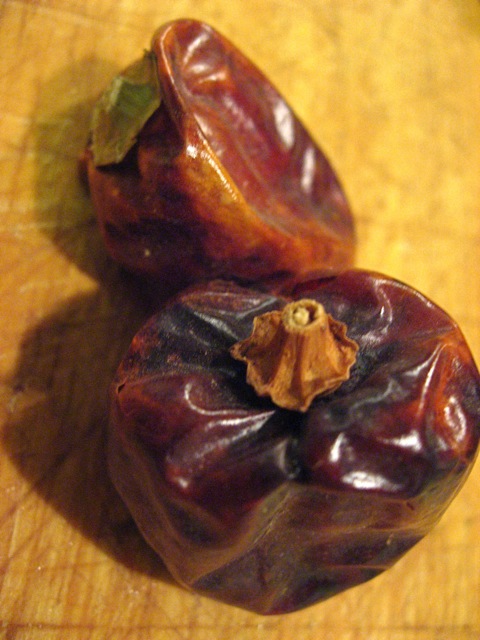
Dried Sichuanese facing-heaven Chilies

If you’ve never gone shopping in an ethnic market where most of the packages are unintelligible and the staff doesn’t speak very much of your language, you don’t know what you’re missing. It’s like taking a little vacation without leaving home. Oh, and how did the Dan Dan Noodles turn out? Let’s put it this way, the cooking was way easier than the shopping and just as much fun. The dish comes together very quickly and is multi-layered with classic Sichuan flavors including the pleasurable numbness of the Sichuan pepper, and the heat from the “facing-heaven” chilies. If I do say so myself, these Dan Dan Noodles were better than any I’ve had in New York’s Sichuan restaurants.
I used to think of Thanksgiving as an invisible border when it came to the farmers’ market. The purveyors saved up a good amount of their best produce for the official holiday of gluttony, after which things slowly slid downhill until all that was left in the freezing depths of February were turnips and rutabagas.

Actually, it’s not that bad. We are without a fish monger for most of the winter (I wouldn’t want to go out fishing in that weather either!), but our meat sellers stick around, and there is always bread, milk, cheese, eggs, root vegetables and some hearty winter greens.

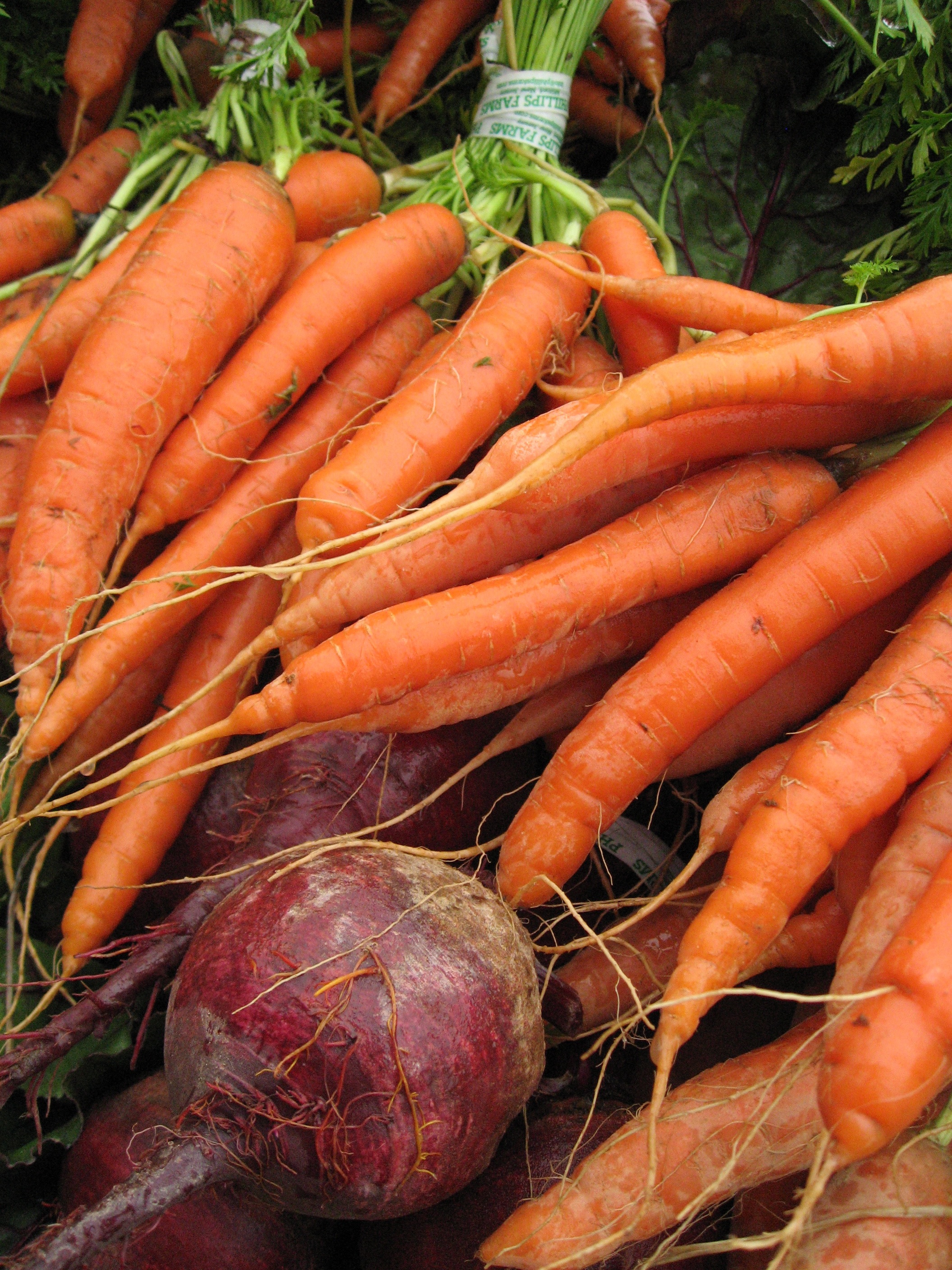
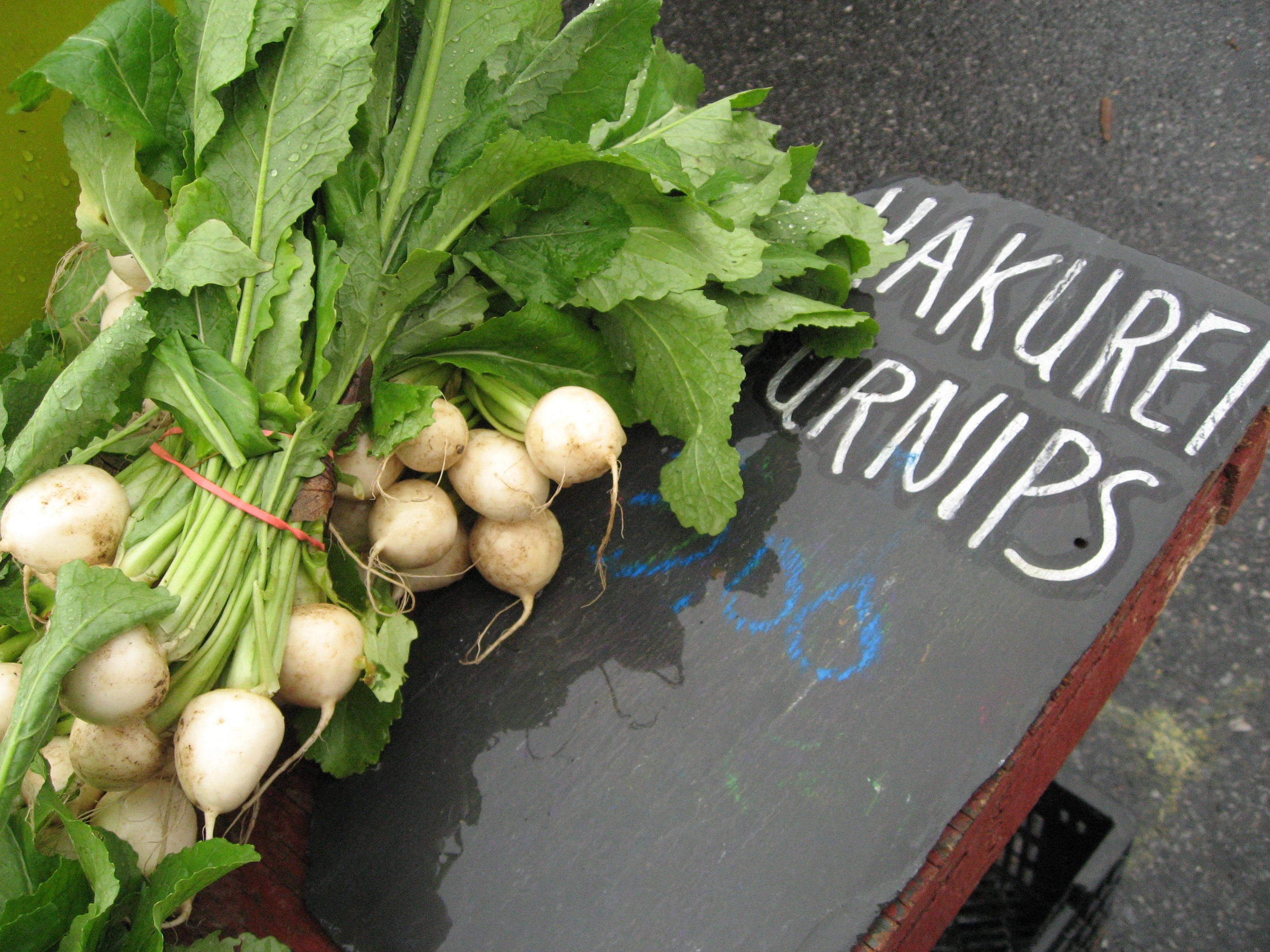
Quite a few NYC farmers’ markets are open all year round. Go for a visit, you might be surprised at what’s available. In the meantime, here are some photos of the Grand Army Plaza Farmers’ Market in Brooklyn on a rainy saturday after Thanksgiving:

Carrots and Beets


Baby Hakurei Turnips


Pinecones for Sale at the Christmas Tree Stand


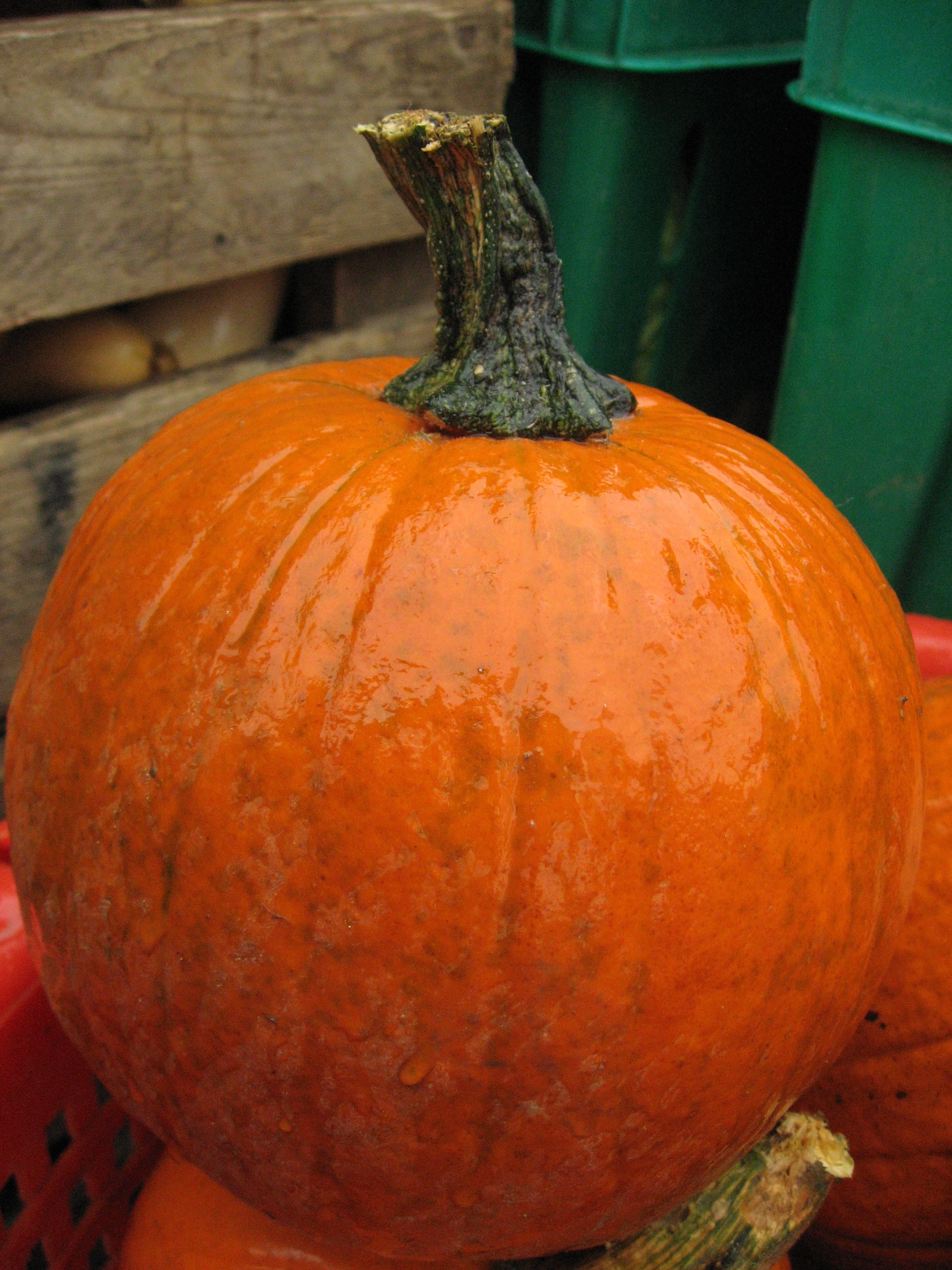
A Very Orange Pumpkin


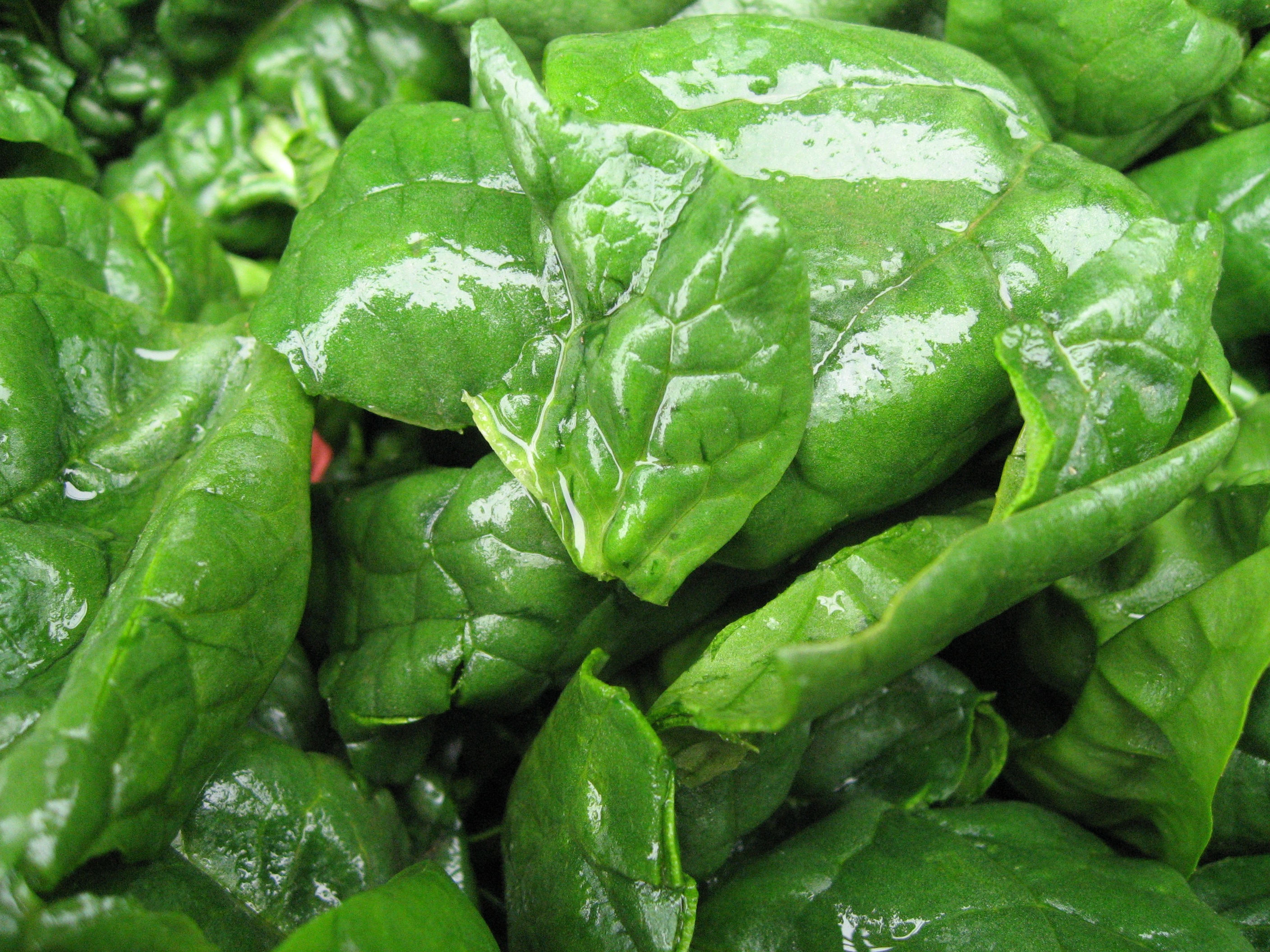
Beautiful Spinach Wet with Rain


This Houseplant Gives Us Splash of Color on a Gray Day


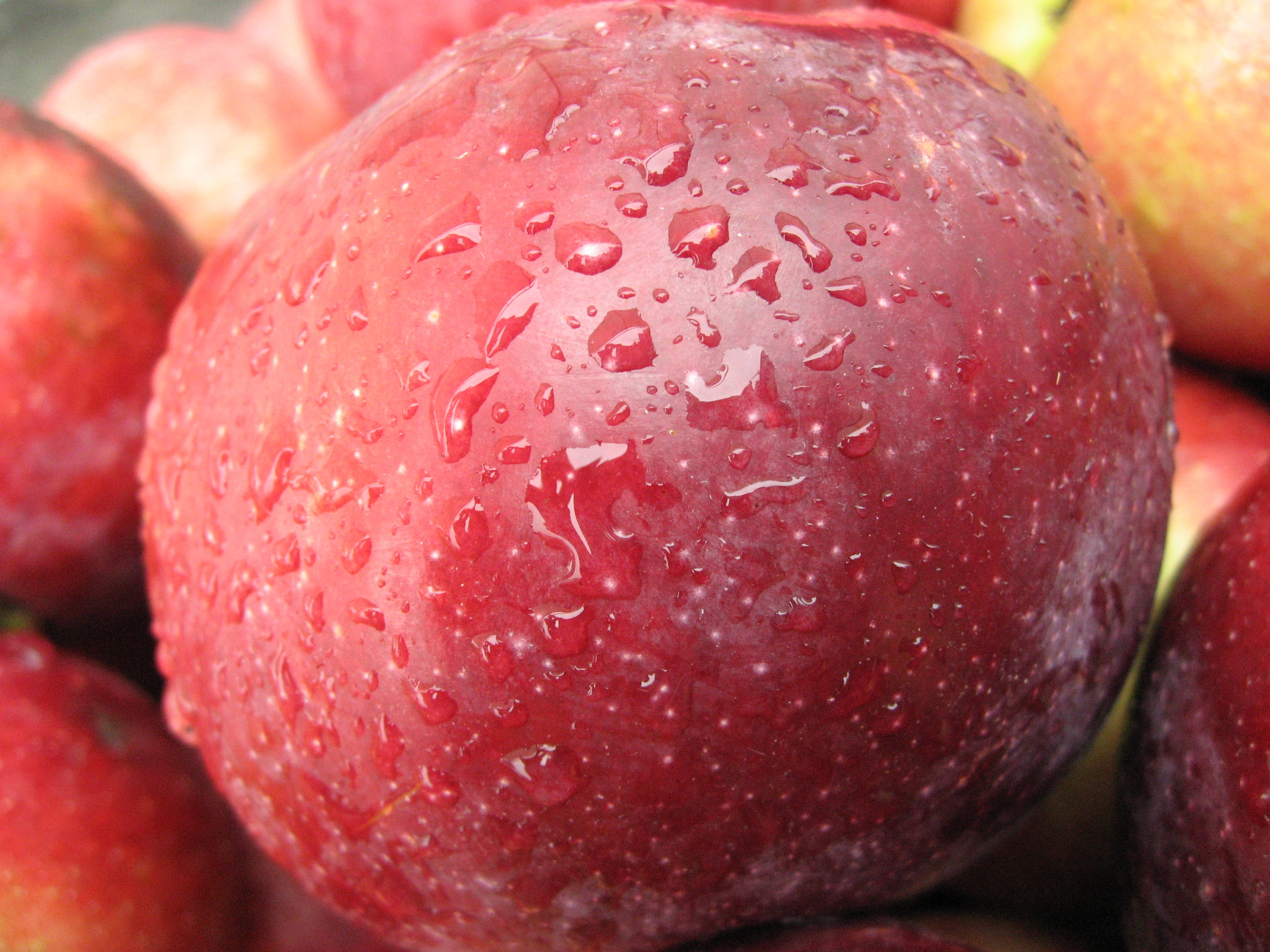
An Apple A Day. . . Especially if it's Raining

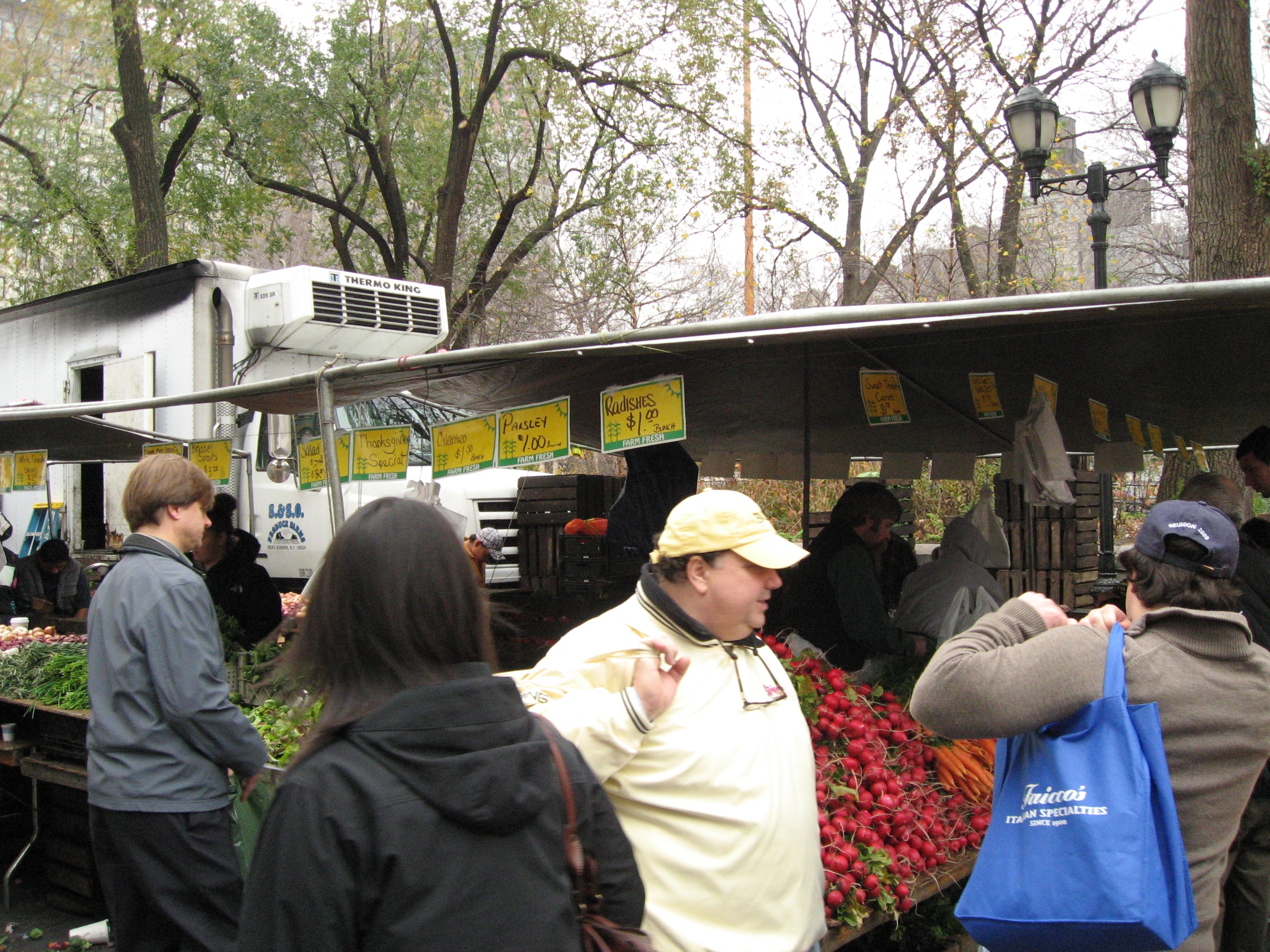
Pre-Thanksgiving Shopping at Union Square Farmers' Market, NYC

Thanksgiving is a bit of a Busman’s Holiday for food bloggers, consequently I’m spending today in the kitchen. In lieu of a post, here’s a photo for quiet contemplation. I can promise you that the Union Square Farmers’ Market in New York City was anything but quiet this morning, but I survived.

Here’s our Thanksgiving menu this year:

Daniel Boulud’s Chestnut Soup which I found via Food News Journal
A Heritage Turkey from D’Artangnan
A traditional Sage, Celery and Bread Stuffing
Cranberry Port Gelée from Canal House Cooking Vol. 2
A Warm Salad of Autumn Greens with a Plum Vinaigrette from Fine Cooking
Potatoes Delmonico
Brussels Sprouts for People Who Think They Don’t Like Them
and my Mother’s fabulous pies, Mincemeat (with real meat!) and Pumpkin.

Happy Thanksgiving everyone!

“Is Slow Food Really Slow?” is a series here on Comestibles in which we explore the hypothesis that some of the processes many modern home cooks have declared too time consuming are a lot easier than the admen would have us believe.

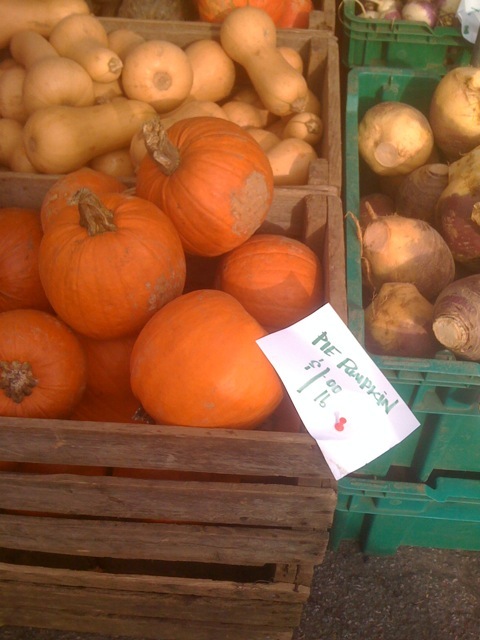
Everybody panic! It’s the great pumpkin shortage of 2009! I, for one, am deeply suspicious that Nestlé/Libby is making it all up to increase sales. I can report that my local grocery stores have plenty of canned pumpkin on the shelves as I write (the Sunday before Thanksgiving) and my mother, who is providing pie — which is of course the best in the universe — for our gathering, has not called to tell me that she will have to make apple instead this year. We had terrible rain during the growing season here in the northeast, and yet, yesterday at the Farmers’ Market, they had lovely pie pumpkins for sale at $1/pound. How are pumpkin supplies in your area?

If you can’t find pumpkin canned or fresh, I would recommend substituting sweet potato or butternut squash, I’ve heard that it’s difficult to tell the difference once the sugar, spices, eggs and cream are added.

When a friend of mine recently gave me a sugar pumpkin from her garden, I got excited because I’ve been wanting to try making pie from fresh pumpkin for years and the best type to use is the sugar pumpkin (sometimes called pie pumpkin). If you try this at home, don’t use a Halloween Jack ‘O Lantern type pumpkin. They are not sweet enough and they’re also quite a bit more fibrous.

I think we can safely say that it will take longer to make a pumpkin pie this way since opening a can only takes about 30 seconds and roasting a pumpkin takes about an hour and a half. However, as with home baked bread, the active time required is a lot shorter than you might think: about 23 minutes. I timed it thus (I have colored the active parts green, for the rest you can be out of the kitchen):

Chop in half and clean out the pumpkin: 15 min.
Bake pumpkin: 90 min.
Cool pumpkin: 15 min.
Scoop flesh out of pumpkin: 5 min.
Puree pumpkin flesh in food processor: 3 min.

So we’ve established that while yes, technically it is slower than opening a can, it’s not as horribly time consuming as you might think. But does the pie taste better? I did not go so far as to make two pies side by side for comparison (I’ll have enough weight to lose after the holidays as it is, okay?), but going on the memory of the many pies I have eaten which were made with canned pumpkin, I can say that I really didn’t detect any particular difference in flavor. It was delicious! However, I found it very satisfying to make a pie the way my great-grandmother would have, and I didn’t have to add another can to the recycling bin.

One thing I did notice is that after roasting, when I pureed the pumpkin it was a very bright orange, not that dull brownish color you find in canned pumpkin. I’m no nutritionist, but I’m guessing there was a lot more beta carotene and other “good for you” compounds in the fresh pumpkin.

So get thee to a Farmers’ Market and buy some sugar pumpkins. The one I used made the perfect amount of puree for pie (you need about 2 cups of puree for a 9 inch pie). I didn’t measure it but it looked to be about an average size based on what I’ve seen for sale. Ask your farmer, I’m sure she can tell you which size to get. Or better yet, buy two and make pumpkin muffins, or pumpkin bread with the extra. The puree also freezes very well, so don’t worry if you have too much.

Fresh Pumpkin Puree

Makes about 2 cups of pumpkin puree

1 medium sized sugar pumpkin (also called a pie pumpkin)

Preheat oven to 350 F.

Cut the pumpkin in half lengthwise and remove the stem. Scoop out the “guts,” saving the seeds if you wish for roasting later. Place the pumpkin halves on a lightly oiled baking sheet, cut side up, and bake until the pumpkin begins to collapse in on itself and the flesh is tender (about 90 minutes).

Allow the pumpkin to stand until it is cool enough to handle easily (about 15 minutes). Then scoop the flesh out of the skin and puree in a food processor until smooth. If your puree seems a little watery (mine wasn’t at all, but pumpkins can vary), line a strainer with cheese cloth and set it over a bowl. Cover the bowl with plastic wrap and leave it to drain overnight in the fridge. The final puree will keep in the refrigerator for 2-3 days and freezes very well.

If you need a pie recipe, try this one from Simply Recipes, it turned out very well and I especially liked the addition of cardamom to the spice mixture.

Photo by Flickr user midiman

Ah yes, the traditional Thanksgiving menu; let’s assemble the parade of protein and starch shall we? Turkey (of course!) with some kind of stuffing usually involving bread; mashed potatoes, or a creamy, cheesy, potato gratin; sweet potatoes, (no, they are not yams!) with or without marshmallows, as you like; maybe some preparation of turnips or squash; cranberry sauce, wobbly or not; and some luscious pumpkin pie. See what I mean? Not too much in the way of green vegetables.

To prevent holiday scurvy in our house we try to provide at least one green vegetable every year. One big hit from the past, which I may make again this year, is a Warm Salad of Autumn Greens with Plum Vinaigrette from Fine Cooking Issue Number 29, November 1998 (yes, I am a long time subscriber). It combines slightly wilted spinach, swiss chard (or kale) and frisée (or escarole) with toasted hazelnuts and a dressing made from plum preserves and Champagne vinegar. Besides being good for you (your digestion will thank you in the morning), the greens and the fruity, sharp vinaigrette make a nice palate cleanser between helpings of those heavier dishes. Hey look, here’s the recipe on the Fine Cooking website.

Another wonderful green option is brussels sprouts. I know some people claim not to like them, but try out the recipe below and see if they still protest. I was recently shopping at my local farmers’ market with a friend and saw sprouts still on the stalk, looking like some kind of weird modern art. In the finest market tradition, my friend rattled off this ridiculously simple recipe which I tried that very night. My husband, who is agnostic, but wary, when it comes to brussels sprouts, loved them; I swear we ate a pound between us.

Their little tiny leaves get a bit charred and crunchy, giving them some sweetness which balances perfectly with the balsamic vinegar. Trust me, those sprout haters will be asking for this recipe as you send them out into the night full of protein, starch, and a few green veggies.

Brussels Sprouts for People Who Think They Don’t Like Them

If you can’t find brussels sprouts still on the stalk, look for firm, dark green ones with no yellow leaves.

Serves 4

1 pound brussels sprouts
olive oil
sea salt
freshly ground black pepper
balsamic vinegar

Preheat oven 350 F.

Pour a liberal amount of olive oil into a large sheet pan or baking dish. Slice your sprouts in half and put them cut face down in one layer in the pan. Moisten the tops of the sprouts with a little more oil, sprinkle with salt and pepper and roast for about 45 minutes or until they’re starting to turn a little black (really!). Put them in a serving dish and toss with some good balsamic vinegar.

friday

I was going to title this article “Friday Night Cleaning Out the Fridge Dinner.” But somehow the image of cleaning out the fridge leads to unfortunate thoughts of fruits and vegetables past their time and even mold. Not very appetizing really. So I started thinking like a restaurateur or a marketer. Friday Night Pre-Market Dinner sounds a lot more appealing; almost like a special prix fixe dinner menu.

We’re lucky to live near a very robust, weekly farmers’ market that includes milk, meat, eggs, vegetables, fish, and even mushrooms. We try very hard to buy most of our food there every week, only supplementing with staples like flour, olive oil, and chocolate from the supermarket. In winter of course this becomes more difficult, but you’d be surprised the things you can do with turnips and rutabagas (that’s swedes to those reading from across the pond).

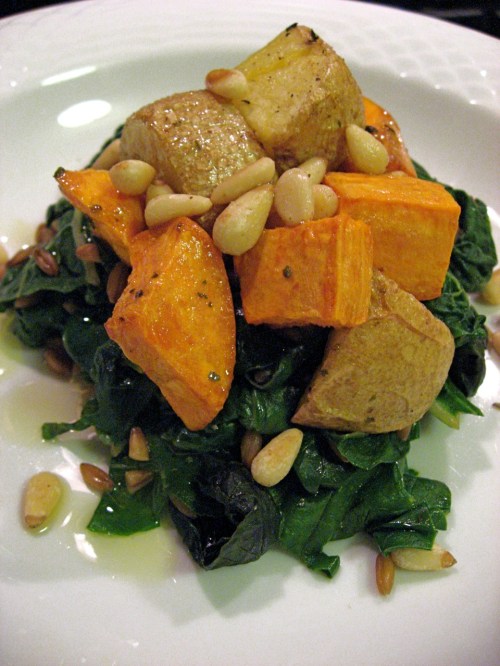
Since the market is on Saturday, in our house it makes sense to use things up by Friday, making room for all the new things we are invariably tempted by at the market. This week, I had the following ingredients to work with on Friday evening: some slightly sad sweet potatoes, regular potatoes, and a lovely bunch of rainbow chard that looked as crisp and fresh as the day we bought it. I feel this is one of the advantages of buying local food. It’s a lot fresher when you buy it and it lasts a lot longer.

I tossed the potatoes (both kinds) in olive oil and some herbs de provence and put them in the oven to roast. These are my go to herbs when I’m in a hurry, or not sure what to use. They go with everything!

Somehow, in my mind, chard is associated with raisins, so I put some in a small dish and poured sherry over them, leaving them to soak. I had some lovely farro in the pantry from Cayuga Pure Organics, so I put that on to simmer in a pot with some homemade chicken stock I grabbed out of the freezer. Speaking of the freezer, did you know that it is the best place to store your pine nuts? They keep for a long time and don’t go rancid. I pulled them out as well and toasted a nice big handful in a dry skillet.

While the farro bubbled away, I cut the big stems and veins out of the chard and tore the leaves into bite sized pieces. Once the veggies were basically roasted and the farro was almost cooked (about 30 to 40 minutes) I threw the chard in with the farro which still had a tiny bit of liquid left and stirred it about until the greens were nicely wilted. Along the way I also drained and tossed in the sherry soaked raisins. Overall, I think it was quite successful, the chewy farro made a nice hearty base for the dish and each bite was full of little surprises, especially those sherry-soaked raisins.

What are your favorite “pre-market” recipes?

Roasted Autumn Vegetables with Farro and Rainbow Chard

Serves 2

1½ tablespoon of golden raisins
dry sherry
2 potatoes
2 sweet potatoes
olive oil
1 tablespoon herbs de provence
1 cup farro
1½ cups homemade chicken stock or low sodium canned stock
salt
freshly ground black pepper
1½ tablespoons pine nuts

Put the golden raisins in a small dish and cover with sherry.

Peel and cube both kinds of potatoes. Put them in a baking dish and toss with olive oil and the herbs de provence, then sprinkle liberally with salt and freshly ground pepper. Roast the vegetables in a 350F oven for 30-40 minutes or until tender.

Meanwhile, bring the chicken stock to a boil in a saucepan and add the farro. Simmer partially covered until almost done (about 30 minutes).

While the farro is cooking, toast the pine nuts in a dry skillet until fragrant and slightly brown. Pay careful attention as they can burn very easily.

If necessary, cut the big stems and veins out of your chard and tear it into bite sized pieces. Once the farro is done, drain the golden raisins and add them to the pot. Next, add the chard and stir until wilted (about 5-7 minutes). Season to taste with salt and pepper.

To serve, make a bed of the farro, chard and raisins on the plate, put the roasted veggies on top and sprinkle with toasted pine nuts. A drizzle of olive oil completes the look.

egg

Soft boiled eggs are oddly comforting and yet luxurious at the same time. Maybe it’s because I’ve most often encountered them while staying in a cozy bed and breakfast somewhere in Europe, run by a kind grandmotherly type. Who can resist the lady in the frilly apron asking, “would you like more toast dear?”

Recently I ran across this wonderful collection of genuine traditional Irish recipes (no green food coloring here!) which of course included soft boiled eggs. It got me thinking that I should try making this time honored breakfast at home.

How could I have waited so long? This is one of the easiest breakfasts I’ve ever made. No messy pans to clean up, and it takes a total of about 5 minutes! Better yet, the fact that the egg is still in it’s shell when served forces you to eat slowly, giving your stomach a chance to tell your brain that it is full. Surprisingly, one egg and one slice of buttered toast is very satisfying and sticks with me right through to lunch at the cost of only about 198 calories.

I know many people worry about the risk on contracting Salmonella from raw or undercooked (i.e. soft boiled) eggs. The Centers for Disease Control (CDC) estimates that 1 in every 10,000 eggs may be contaminated with Salmonella and that 1 in every 50 “average consumers” could be exposed to a contaminated egg each year.

I think the best way to combat this is by not being an “average consumer.” Before factory farming, Salmonella was not a wide spread problem in this country. If you buy your eggs from farmers who raise their chickens the way your great-grandmother did, you will significantly lower your risk of being exposed to Salmonella.

I buy eggs from Tello’s Green Farm stand at at the Grand Army Plaza Greenmarket in Brooklyn. Not only are these chickens organic, they have no cages whatsoever, roaming around the Tello’s 5 acres in Red Hook, NY scratching for grubs and taking baths in the dust, just as my great-grandmother’s chickens did (yes, my great-grandmother, really did raise chickens). Not only do I feel more comfortable soft boiling these eggs, they also taste fantastic, with bright orange yolks indicating their freshness.

There is one other danger associated with soft boiled eggs. If you’re not careful you might become an inveterate egg cup collector. For more information see the Ultimate Egg Cup Resources Guide

A Soft Boiled Egg with Toast “Soldiers”

1 large egg at room temperature
water
salt
1 slice of bread
soft butter

Fill a small sauce pan half full of water and bring it to a gentle boil. Use a spoon to lower your egg carefully into the water so it doesn’t hit the bottom and crack. Boil your egg for 4 to 6 minutes depending on your taste. At 4 minutes the whites are opaque but still soft and the yolk is very runny whereas at 6 minutes the whites are all solid and the yolk is a bit runny.

Put your bread on to toast now so it will be done at about the same time as your egg. When your bread is toasted slather it nicely with butter and cut it into long narrow strips that you can dunk into the top of your soft boiled egg. These are your “soldiers.”

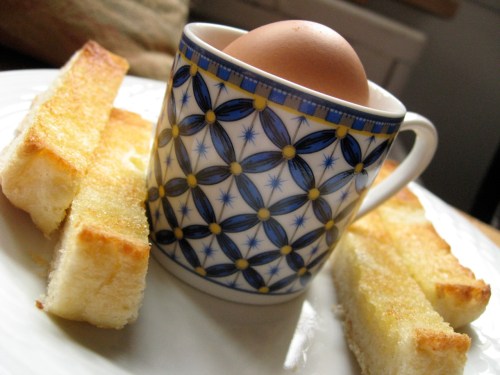
When the egg is finished use a spoon to remove it from the pot and gently dunk it in some cold water (or run it under the tap) to stop the cooking. Transfer it to an egg cup and serve with salt. If you don’t have an egg cup, espresso cups do quite nicely (see photo above).

pavilion

Oxford Cricket Pavilion / photo by bishib70

In September I went to food history geek wonderland, namely the 2009 Oxford Symposium on Food and Cookery. It was my first time attending and if you’re thinking about going next year, I highly recommend it.

Each year the Symposium has a theme, alternating between concrete and abstract ideas. For example, this year’s theme was “Food and Language,” an abstract idea, and next year will highlight the more concrete “Cured, Fermented, and Smoked Foods.”

The event is put on by the Oxford Symposium Trust which holds a fund raising picnic each year on the first day of the Symposium. This year to go with the theme, the picnic was based on the Oxbridge Luncheon in Virginia Woof’s book A Room of One’s Own. It was held at the University Parks Cricket Pavilion (see photo above).

The menu was created by Elisabeth Luard, Geraldene Holt, and Derek Muircroft. The gathering was particularly decorated by the presence of Mrs. Woolf herself, in the personage Ms. Ellie Piercy, late of the Globe Theatre. She was received with much enthusiasm by the assembled crowd as she read from A Room of One’s Own and some of her letters; including one to her sister in which she described the stressful day she had to sack her cook. The menu was as follows:

Individual game pies served with spiced pear chutney, salmagundi, and potato salad with Old English Salad Cream.

Glorious Fruits and Friandises

Isis and other cheese by the Oxford Cheese Company

Rice puddings by Mrs. Geraldene Holt

Accompanying wines donated by Penfolds, Peter Lehmann, and Yalumba

It was a lovely late summer day and the historic surroundings only added to the bonhomie. I found my fellow symposiasts — some of whom are very well known in the food world — very welcoming, encouraging this new comer to plunge right into the lively conversation.

Despite the exquisite game pies, I tried to eat lightly because I knew dinner that evening was going to be a real treat. Chef Fergus Henderson, of St. John Restaurant in London, created a dinner based on the diaries of Samuel Pepys, in honor of Harlan Walker, the long-time editor of the Symposium’s proceedings.

Here’s the menu:

Parmesan Cheese Straws and Champagne

Ox Tongue & Beetroot
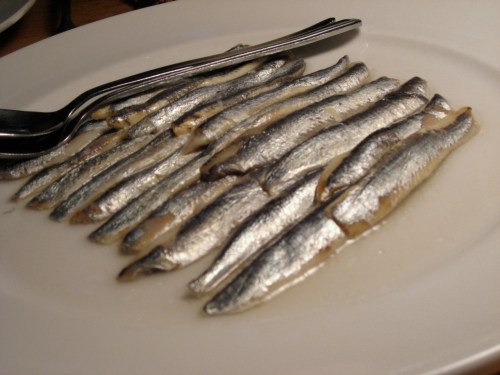
White Pickled Anchovies
Bottarga
Bread and Butter
Served with Solear Manzanilla (Bodegas Barbadillo, SL)

Venison & Trotter Pie
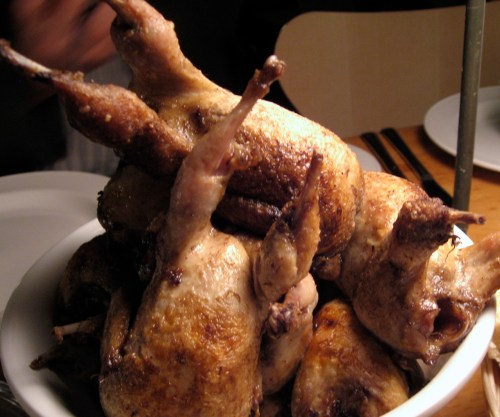
Roast Quail
Boiled Leg of Mutton with Caper Sauce
Fricasée of Rabbit with Peas
Beef Shins
Whole Roast Jerusalem Artichokes
Served with Château Bahans Haut-Brion 1999 & Clarendelle rouge 2004.

St. Paul’s Aflame by Jelly Mongers Bompas & Parr
Served with Málaga No 1 Selección Especial 2006 & Alvear Solera 1927 Px (Bodegas Alvear)

Mr. Pepys’s diary is one of the few contemporary reports we have of the Great Fire of London in 1666. When he saw that the fire was coming close to his house he dug pits in the garden to bury some of his prized possessions, including his wine and a wheel of parmesan cheese. This is what inspired Mr. Henderson to create the Parmesan Cheese Straws we had for an appetizer.

The food was glorious. It was all served family style at the long tables in the dining hall at St. Catherine’s College, Oxford. It really put me in mind of the “groaning boards” of yore described in historical novels. And best of all, I got to eat it surrounded by historians, cookbook writers, journalists, and food enthusiasts of all stripes. Here are a few pictures, to give you the idea:

anchovies

White Pickled Anchovies

quail

A Bowl of Quail

The most exciting part of the evening was the unveiling of the banquet course entitled St. Paul’s Aflame, which was a representation of the Great Fire of London in jelly (that’s Jello to us Americans). It was made by Bompas & Parr, two young men who have recently revived the art of jelly making in the UK.

jelly

St. Paul's Aflame

jellyhouses

Jelly Houses of London

It was presented on a long rectangular table with St. Paul’s Cathedral done in orange jelly; the river Thames represented by curving pieces of mirror traveling down the table; and as far as the eye could see little houses of jelly in different shades of red and orange representing the burning city of London. The jellies were made with natural fruit juices and had just the right amount of sweetness; very different from the neon green Jello of my youth. And of course there was the wobbly factor. After all the wine we had at dinner, we did enjoy poking at our little houses and watching them jiggle.

At this point, the Symposium proper had not even begun! Stay tuned for more reflections on Oxford, 2009 soon.

loafbread

For almost a hundred years admen (and yes, they have mostly been men) have been telling us, “cooking is hard; let’s go shopping.” In particular, they want us to shop for processed foods like cake mix and canned chicken stock. But is it really that hard to make these, and other things at home, the way our great-grandmothers did? I intend to find out.

Today begins a new occasional series here on Comestibles called, “Is Slow Food Really Slow?” in which I examine the hypothesis that some of the processes many modern home cooks have declared too time consuming, like baking a cake from scratch or making chicken stock at home, are a lot easier than the admen would have us believe. We’ll begin with the staff of life: bread.

If you can answer your email, write the latest report required by your boss, and talk on the phone with a client, all while tweeting with your best friend about where to meet after work, then you can bake bread at home. Your great-grandmother knew that it was all about multi-tasking and she didn’t even have the Internet.

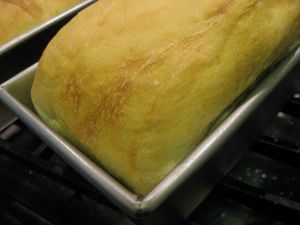
The amount of active time in the kitchen needed to bake bread, without using any fancy equipment, is about thirty minutes. Yes, you read that right, thirty minutes. I timed it myself, just the other day. It’s all the waiting time in between that scares everyone (the total time is about four hours), but this is where you pull out your mad multi-tasking skills.

The process of baking bread can be divided into seven distinct segments, but you only have to be in the kitchen for three of them. This leaves you with several periods during which you can do other things. You can even leave the house if you’re careful about it. Here is how the time breaks out (I have colored the active parts green, for the rest, you can be out of the kitchen):

Measure and mix the ingredients: 10 minutes
Short rest: 10 minutes
Knead: 10 minutes
First Rise: 90 minutes
Punch down and shape: 10 minutes
Second Rise: 45 minutes
Bake: 45-50 minutes

There is really only one danger faced by the multi-taking baker: over-proofing your dough. If you choose to leave the house during that 90 minute first rise, be sure to return on time. If you allow your dough to rise too long, the yeast can become exhausted and the strands of gluten can break. This will result in door stops instead of loaves.

Also, if an unforeseen disaster strikes, forcing you to abandon your bread making, you can shove the dough in the fridge to slow it down and pick up later where you left off. Once you’ve baked bread at home a few times, the fear will leave you and you’ll realize that it is not nearly as persnickety as we have been led to believe.

Home Baked Bread

Adapted from Marion Cunningham

Makes two 8½ x 4½ x 2½-inch loaves

If you haven’t done this before, here’s a nice video demonstration of how to knead bread.

1 package active dry yeast (or 2¼ teaspoons)
2½ cups warm water
2½ teaspoons salt
5½ to 6 cups all-purpose flour

Stir the yeast into the warm water in a large bowl and let stand for a minute. Add the salt and 4½ cups of the flour and stir with a wooden spoon until well combined. Add a little more flour if needed for the dough to come together into a mass that can be kneaded. Turn the dough out on to a lightly floured work surface, knead it for 1 minute and then let it rest for 10 minutes.

After resting, knead the dough for about 10 minutes sprinkling flour on it, and the work surface to prevent it from being too sticky. Stop kneading when the consistency of the dough changes and and it becomes smooth and elastic. Grease a large bowl with butter, put the dough in it, turning it to coat it slightly with the butter, cover with plastic wrap, and let rise in a warm place until double in size (about 90 minutes).

You’ll know the dough has finished rising when you poke it with your finger and it holds the depression and doesn’t bounce back. At this point, punch down the dough and divide it in half. Shape the pieces into loaves by stretching gently down and around the sides and forming a seam at the bottom. Place each loaf, seam side down, in a greased loaf pan. Cover the pans with a dishtowel and put them in a warm place to rise again, until the dough is double in bulk (about 45 minutes). Bake the loaves in a 350F oven for 45-50 minutes, or until the crust is well browned. Remove from the loaf pans and turn out on racks to cool.

cookedhead

Remember that game your mother or grandmother used to play with you? This little piggy went to market, this little piggy stayed home. Or maybe you’ve played it with your lover, grabbing their toes and making them squirm with laughter. Well, Fergus Henderson, Britain’s Minister of Offal, thinks about romance in a slightly different way.

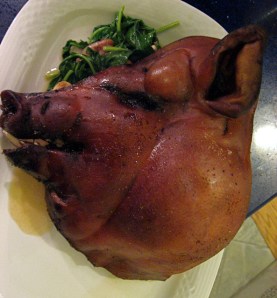
In his most recent book, Beyond Nose to Tail: More Omnivorous Recipes for the Adventurous Cook, he describes a certain recipe as “a perfect romantic supper for two. Imagine gazing into the eyes of your loved one over a golden pig’s cheek, ear and snout.” The recipe in question is Pot-Roast Half Pig’s Head.

As you may know, I recently came into possession of half a pig’s head. So, gentle reader, you know what I had to do.

It’s a really easy recipe that basically involves braising half a pig’s head for about 3 hours, in chicken broth, brandy, and white wine with some garlic and shallots; and then wilting some greens in the remaining cooking liquid. The only fussy bit is shaving the pig. Yes, they are quite hairy, so give yourself a good 15 minutes for that part.

I’m not going to reproduce the recipe here because Mr. Ferguson’s whimsical and slightly archaic style is what makes it. Go buy the book or get it from the library and take it to bed with a glass of wine. I promise, you’ll have a good time.

If your beloved is an appreciator of food and an adventurous eater, Fergus Henderson just might be right to invoke Tin Pan Alley love songs at the end of his recipe, when he writes, “There you have it, dinner for two; open something red and delicious: Moon, June Spoon.”

It was the crispiest pig skin I’d ever had, crunchy and rich like the perfect piece of buttered toast. After a few moments, I realized I was drunk, but not on the wine, which if I remember correctly was a serviceable Côtes du Rhone. No, I was drunk on fat. It goes right to your head, just like Champagne. You feel a bit dizzy, and very satisfied; sort of like after sex.

Thanks Fergus.