Feeds:
Posts
Comments

pate3

In pre-World War II Brittany, Autumn was the traditional time to slaughter the pig. The celebration was often called a boudinnerie after the blood pudding that might be made or perhaps a gratonnerie if pork cracklings were on the menu. All the parts of the pig were used to make a large variety of dishes which were then washed down with lakes of cider and eau de vie.

When I first found out I would have the opportunity to cook with some very fresh, local pig’s offal, one of the first cookbooks I opened for inspiration was When French Women Cook by Madeleine Kamman. It is a memoir with recipes that really captures the France of the 1930s-1950s. In the introduction Kamman writes, “most of the recipes in this book have never been written down before,” and then she goes on to describe her relationships with the eight women (conveniently from eight different regions of France) who taught her about cooking at various points in her life.

In her description of Breton pig slaughtering traditions Ms. Kamman mentions dishes called cochonnailles or pork delicacies served cold. In honor of the season I decided to use my pork livers and hearts to make Ms. Kamman’s recipe for Grosse Cochonnaille which she translates as Coarse Country Pâté.

Special thanks to Kenny Dahill of MarWin Farm for the very fresh livers and hearts which he provided gratis.
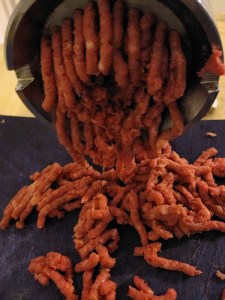
grinding

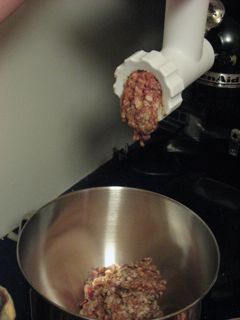
I had never made pâté before and found it relatively easy. The only special equipment you need is a meat grinder. I used the grinder attachment for my KitchenAid mixer and it worked quite well. One technique of pâté making that Kamman does not address in the book is the importance of keeping your equipment and ingredients very very cold. This prevents the fat from separating out of the mixture. Luckily, Ms. Kamman’s book occupies the same shelf in my home as Charcuterie by Michael Ruhlman and Brian Polcyn, which has lots of detail on this subject.

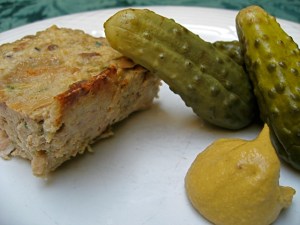
It’s obvious that Ms. Kamman means this dish to be for a celebration as it serves 12! I wound up with a large 9×13 inch baking pan full of porky, fatty goodness. Even though the pâté is made with liver, it’s mild and rich, not too offally at all. I particularly like the spicing which is the traditional quatre épices or four spice mixture that is often used in baked goods like pain d’épices. Here, the hints of cinnamon and clove lend a certain sweetness to the pâté.

This dish is best served with a bottle of Muscadet, crusty French bread, grainy mustard, and lots of pickles.

Grosse Cochonnaille
(Coarse Country Pork Pâté)

Adapted from Madeleine Kamman with technical help from Michael Ruhlman and Brian Polcyn

Serves 12

1 pound pork liver (or a mixture of liver and hearts)
2 pounds Boston butt of pork
1 pound unsalted fatback
4 cloves garlic, peeled and coarsely chopped
2 onions, peeled and chopped in a 1 inch dice
4 shallots, peeled and coarsely chopped
½ cup coarsely chopped parsley
4 slices of white bread, crusts removed
½ cup milk
6 eggs
4-½ teaspoons salt
1 teaspoon quatre épices (see below for recipe)
Freshly ground black pepper
Cayenne pepper

Before beginning, put your meat grinder in the freezer to chill for at least an hour.

Remove the membranes from the liver and cut away the flaps, lobes, gristle and membranes from the hearts (if using), then chop both meats into a 1 inch dice. Cut the Boston butt and the fatback into 1 inch cubes. Toss the chopped meats and fat thoroughly with the garlic, onions, shallots and parsley. Cover this mixture and put it in the refrigerator to keep it cold. You can also use the freezer for this, but if so, don’t allow it to freeze solid.

Tear the bread into 1 inch pieces and soak it in the milk for about 5 minutes. Then break the eggs into the bowl with the bread and milk and add the salt, quatre épices, 6 grinds of pepper from the mill, and a large pinch of cayenne pepper. Use a whisk to beat this mixture together well. Cover the egg and spice mixture and place it in the refrigerator to chill.

Now to grind the meat. It is best to catch the ground meat in a metal bowl as it will retain the cold better. Place the metal bowl inside another bowl filled with ice to prevent the fat from getting too warm during the grinding process.

Remove your grinder from the freezer and set it up. At the last moment bring the meat mixture out of the refrigerator or freezer and grind it as quickly as possible. When finished grinding stir in the cold egg and spice mixture from the refrigerator. Be sure to combine it well so the spices are distributed evenly.

Take a spoonful of the pâté out of the bowl and cover the rest, putting it in the refrigerator so it stays cold. Make a small patty of your spoonful of pâté and cook it in a frying pan. Cool it quickly by putting it in the freezer and taste it cold to check the seasoning of the pâté. Remember that foods served cold need more seasoning than those served hot. Adjust the seasonings and make another test patty if needed. When you are satisfied with the flavors, pour all of the pâté into a 9 x 13 inch baking dish and bake at 350 F for about 45 minutes or until it is nice and brown and the internal temperature reaches 150 F on a thermometer. Remove the pâté from the oven and allow it to cool to room temperature. Then cover and chill for at least 3 hours before serving.

Quatre Épices

2 teaspoons ground cinnamon
4 teaspoons ground allspice
1 teaspoon ground cloves
2 teaspoons grated nutmeg
4 teaspoons ground coriander

Ironically, Madeleine Kamman’s recipe for quatre épices contains five spices. Use the freshest spices possible, grinding them yourself if you can. Mix them together and store in an airtight jar in a cool, dark place.
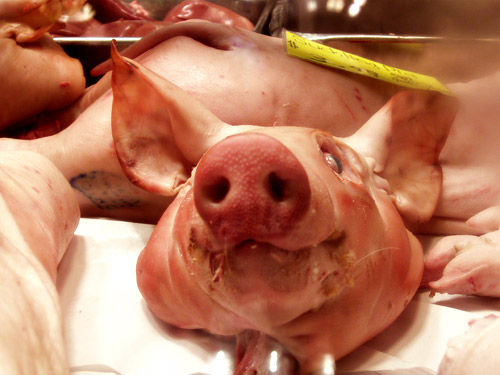
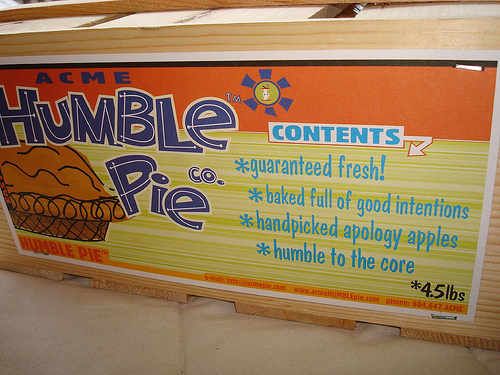
Photo by Tina Vance

Photo by Tina Vance

You’ve heard of The French Connection, well I’ve got a pig connection. A friend belongs to a meat CSA and they’ve got too much offal for their members. (Hmm, that sounds vaguely obscene, doesn’t it?) Anyway, I’ll be receiving some pigs’ livers, hearts, kidneys and maybe even half a head.

I’m currently scouring my cookbook collection for ideas. Thank goodness for Fergus Henderson, Madeleine Kamman, Jennifer McLagan, Darina Allen, and the rest of the motley crew I’ve assembled over the years.

I’m thinking most definitely of some sort of paté, which will be a first for me, but I’d like to try some other things too. If you’ve got any recipes that would work well with these items please pipe up in the comments. I’ll do some cooking this weekend and post the results here next week.

Photo by Flickr User Soliloquy

Photo by Flickr User Soliloquy

My mother always told me never to serve a dish to others that you haven’t made at least once before. But really, who listens to their mother? I’ve been flouting that rule with success for years now, pulling off complex dishes at dinner parties from recipes discovered mere days earlier.

The ancient Greeks had a word for this behavior: hubris. A word derived from another classical language will figure prominently in this story as well: disaster, or literally something that is not in the stars.

I was supposed to bake something for an event. A friend gave me a family recipe, which went perfectly with the theme of the event. As with many family recipes, it was written somewhat cryptically. However, my friend had baked this very thing a few days before and invited me over to sample it. We had a nice long discussion about the oral history of recipes and how important it is to follow your elderly relatives around the kitchen with a measuring cup, pad and pencil to record these family heirlooms.

The day of the event was one of those when everything took longer than it should. Time just got away from me. I should have seen it slipping away but I was busy flouting the rules.

I called my friend when I was halfway through adding the flour and somehow things weren’t looking right. It turns out I had misunderstood the yield of the recipe; I thought I was making two baked items. The yield was for four. Ah well, I thought, I’ll just make something else out of the leftover dough tomorrow.

By the time I was done kneading (yes, this is yeast baking if you must know), it was much later than it should have been. I put the bowl of dough into the oven with the pilot light so it could rise.

It being one of those days, there was an errand that really could not wait. So off I ran while the dough rose.

When I got home, it was about an hour and a half before I had to leave for the event. The dough had only risen a little. I put it back in the oven with the pilot light, knowing from experience that sometimes it takes a bit of time to get going and it rises more quickly later.

I stood in the kitchen, coming to terms with the cold digital reality that I didn’t have enough time to make the fruit component of the dish from the lovely New York State apples I had purchased that morning. With a sense of creeping doom I considered my options.

The previous day, my friend and I had talked about the progression of family recipes through the generations. According to family lore, her great-grandmother had made the fruit part of this dish by hand from whatever fruit was in season. Her grandmother had used canned fruit filling. We both agreed that there was no shame in this. When these modern conveniences arrived on the scene housework was a lot more physical than it is now and women were thankful for one less thing to do as they hung the laundry on the line, kept the toddler from burning herself on the stove, and scolded the dog for digging up the garden again.

A light went on in my mind. If I used canned filling, I just might be able to get it baked in time for the event and it would be “authentic,” for some value of that overused word.

Leaving the finicky dough rising in the oven, I rushed out once more to the store to buy canned fruit pie filling.

When I got back I had about an hour of time left. I knew that I needed to bake for about 15-20 minutes and then cool for 15 minutes before I could leave the house. But, the dough was supposed to rise twice. There was no way I could allow it to do that. I had baked sweet yeast breads before (well, once). If I punched it down, then fitted the dough to the pan, added the fruit, and then allowed it to rise for another 15 minutes or so while the oven heated up, that would work, wouldn’t it? Come on, I reasoned, people like my friend’s grandma made these things all the time while doing six other things (see above). It must be pretty hard to screw up, and I’ve pulled off much more complicated dishes than this, right?

Wrong.

I pulled it out of the oven with about 15 minutes to spare. The edges were brown and lovely, but the apartment didn’t really fill with that fabulous baking, fruity aroma we all know so well. I briefly thought there might be something wrong, but shoved it to the back of my mind as I put the pan on the cooling rack.

In jacket and scarf, I put the still-warm pan on a piece of cardboard so I could carry it on the subway without burning myself and wrapped it all in aluminum foil.

Surrounded by rush hour commuters, I sat smugly on the uptown train thinking, “I’ll bet no one else’s dish will still be warm when it arrives at the event.”

Those whom the gods would destroy, they first make mad with power.

When I unwrapped the item in the kitchen at the event site — and thank those gods mentioned above for that kitchen; more on that later — I discovered little blobs of what looked like butter had risen to the surface. I mentioned it to a colleague in the kitchen and she said, “well, you know what Julia Child used to say about butter…” and we laughed. Upon further examination, the blobs turned out to be pieces of uncooked dough that had risen to the top. I decided to cut a piece and make sure everything was alright. Well, that was the best thing I ever did. It was severely undercooked; beneath the fruit, the dough was slimy and wet. My colleague nodded gravely at the diagnosis.

My mind scrambling, I said, “I’ll put it in the oven and finish it off.” (Thank the gods for that kitchen!) My compatriots were very kind. Cooks everywhere know that sinking feeling when it all starts to go wrong, and so we try to help each other out.

In the main space, the event was beginning. I situated myself in the last row so I could nip off to the kitchen every once in a while and check the progress of the baking. By the end of the event, it was basically cooked. Warily, I put it out on the table with the other offerings, knowing from past experience that people stop at the food table both before and after these events. Unfortunately (or fortunately, depending on how you look at it) the event had run long, and as soon as it was done, everyone rushed to clean up the food table and the kitchen and get out of there.

One person saw my dish and said, “Oh, I didn’t get to try any of that.” and I wryly replied, “That’s because it wasn’t cooked yet.”

Our story ends with me riding home in a mostly empty subway car, holding the same full pan and hoping its contents might be good enough to eat for breakfast. The very portrait of hubris.

I’ve got a whole bunch of dough in the fridge. This time, I’ll definitely let it rise twice — and I just might test it before I try serving it to others. Maybe.

Photo by Lauren Weinhold

Photo by Lauren Weinhold

Sorry anchovies, it’s not you, it’s me. You’re just too intensely fishy for me. I don’t like rejecting foods. Unlike some eaters, I always try something before deciding I don’t like it. I had tried anchovies multiple times and I just couldn’t make it work.

However, as is often true, I was wrong, and I have Marcella Hazan to thank for setting me straight. In her book Essentials of Classic Italian Cooking, she waxes rhapsodic about the little fish for an entire page in the “Fundamentals” section, saying that no other ingredient in Italian cooking “produces a headier flavor.” She also warns readers against buying cheap anchovies, saying that these “mealy, salt-drenched” things are what give anchovies a bad name.

Ah, so that’s it then, I’d just never had good anchovies. This rang true for me because the same thing had happened with olives. Growing up in 1970s upstate New York the only olives I ever had came from a can, so I thought I didn’t like olives. Then I moved to New York City and discovered real olives in their myriad flavors and colors. Maybe the same was true of anchovies?

Marcella recommends whole anchovies packed in salt, which you can easily fillet yourself at home. I decided to find the best anchovies I could and go from there. A very informative article by Ari Weinzweig on The Atlantic web site, recommended Ortiz anchovies from northern Spain as being of the highest quality. He also extolled the superiority of whole fish over fillets, saying they were larger and meatier.

I found some Ortiz anchovies at a local gourmet store but almost dropped them on the floor when I found out the price. Even the manager was surprised, it being a new item. I’m not a cheapskate when it comes to food, but they were three times the price of the regular kind. Also, they appeared to be fillets instead of whole fish and were packed in olive oil.

A few days later, I was exploring the newly opened Bklyn Larder and spied a large jar of salt packed whole anchovies from an Italian company called Nettuno. This is exactly what Marcella recommends and better yet, the price per gram was the same as the regular ones I used to buy.

Soon thereafter, I was pondering what to make for dinner using the last of our weekly farmers’ market haul, a large head of broccoli. I stood in front of the cookbook shelves pulling out volumes at random looking for broccoli in the index. Behold, Marcella to the rescue with Broccoli and Anchovy Sauce for pasta. Perfect, I could use our broccoli and test out the new anchovies.

Marcella’s Broccoli and Anchovy Sauce is similar to a Bagna Càuda in that the anchovies are gently dissolved in olive oil which is warmed over a double boiler. This is then mixed with boiled broccoli and some crushed red pepper flakes (she actually calls for chopped hot red chili peppers but I was in a hurry).

The result is a sauce with a very light body but an incredibly rich — and not too fishy! — flavor. The anchovies rumble at the bottom like timpani in the orchestra, providing the bass note to the whole dish.

Broccoli and Anchovy Sauce for Pasta

adapted from Marcella Hazan

Serves 2

To fillet your own salt packed anchovies: Wash the salt off the anchovies, then pull the fish apart lengthwise into two parts (they come apart very easily). Next grab the spine at the tail end and lift it away from the flesh. All the bones come with it in one piece and you are left with 2 anchovy fillets. Done!

1 large bunch of broccoli, about 1 pound
1/3 cup olive oil
6 anchovy fillets (preferably from whole anchovies packed in salt), chopped fine
1 tablespoon crushed red pepper flakes, or to taste
1/2 pound of short pasta such as orecchiette or fusilli
1/4 cup freshly grated parmigiano-reggiano cheese

Chop off about 1/2 inch of the tough woody end of the broccoli and discard. Cut the broccoli florets away from the stalks. Peel away the tough outer layer of the stalks with a vegetable peeler. Put both the stalks and the florets in a pot of boiling salted water for 3-4 minutes or until just tender to the fork.

Drain the broccoli, break the florets into bite-sized pieces and chop the stalks in a large dice.

At this point put the salted water on to boil for your pasta and cook it to the firmness you prefer.

As your pasta cooks, fill a large saucepan about 1/4 full with water and bring to a simmer. Put the olive oil in a medium sauce pan and heat it briefly over a low burner. Then take the medium saucepan and put it inside the large saucepan, double boiler style. Add the anchovies to the oil. Mash the anchovies with a wooden spoon until they dissolve completely in the olive oil.

Remove the medium saucepan from the double boiler and place it on a medium-low burner. Add the cooked broccoli florets, chopped stalks and crushed red pepper flakes. Cook for 4-5 minutes stirring to coat well.

When your pasta is cooked, drain it and toss with the broccoli anchovy sauce, then add the grated parmigiano-reggiano, toss again and serve.

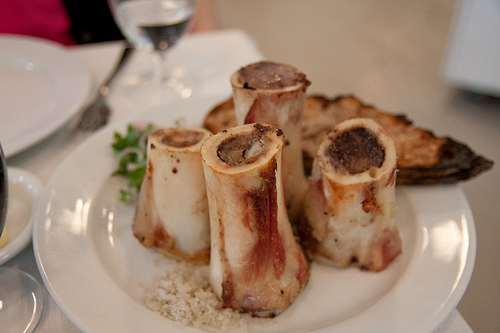
Food on the Bone

Photo by msiew

Photo by msiew

Let’s face it, bones can be inconvenient. In these days of ultra processed food, people have become accustomed to eating food that goes from the freezer, to the microwave, to their stomachs without much pause in between. Also, a large number of American meals are taken in the car, another place where bones are just a nuisance.

After a while, if that’s how you eat, then that becomes how you cook (skinless, boneless chicken breast anyone?) and then the knowledge of how to cook meat on the bone disappears from our society. Please don’t let that happen.

So what are the benefits of food on the bone? First, and most important is flavor. The bones provide collagen, which gives a depth of flavor and satisfying mouth-feel to the dish. The meat closest to the bone tastes different (some say sweeter) because it has more collagen in it. Bones also slow you down. You can’t just gobble your food down in three bites if you have to deal with bones. Studies have shown that eating slowly can help with weight loss. There is also an economic benefit. If you save the bones from your roast meat you can make stock and stash it away in the freezer for the next time you make soup. Once you’ve made a soup with your own homemade stock you’ll never go back to cans or boxes; it tastes better and it’s cheaper.

Unfortunately, these days it can be difficult to buy meat on the bone. Unless you order in advance from your butcher, most likely all he will have is boneless cuts. Farmers’ markets can be a good source of local, grass fed meat and are more likely to sell cuts on the bone. Recently, I was at the Grand Army Plaza Greenmarket in Brooklyn speaking with the guys at the Arcadian Pastures stand about this very subject. They said they’re never quite sure how to answer the question about bones because some customers really don’t want them and others do. Jokes about the difficulty of raising boneless animals aside, they usually bring both bone-in and boneless cuts of their meats to satisfy as many customers as possible.

Next time you’re thinking of having roast beast, try to get it on the bone. It’s worth having to order in advance or going to an unfamiliar store (who knows what else you may discover there).

fictionwritersreview

The sixth, and final, part of the first “Novel Dishes” series is up over at Fiction Writers Review.

If you haven’t seen it before, “Novel Dishes” is an occasional series in which I explore fiction where food is an important theme that supports the plot and drives it forward. Each piece includes at least one recipe based on food described in a novel. In this set of articles I’ve been cooking my way through Audrey Niffenegger’s The Time Traveler’s Wife. If you’d like to see all the columns in the series you can find them here.

Photo by Katy Watts

Photo by Katy Watts

The New York Times published a very important article this past Sunday about the state of meat inspection in the US. They put it on the front page, and it belongs there. The piece is real, old-fashioned investigative journalism, including lots of detail and citing multiple named sources. Kudos to author Michael Moss, who must have been working on this for months.

In summary, the article tells the story of Stephanie Smith, a 22 year old children’s dance instructor, who became infected with E. coli after eating a frozen hamburger made by industrial food giant Cargill and suffered severe complications leaving her brain damaged and paralyzed from the waist down. The article traces the provenance of the pre-made hamburger patty she ate showing that the meat it contained came from four different sources. Moss’s piece also reveals a shoddy patchwork of food safety regulations, enforced only loosely by the US Department of Agriculture (USDA), which make it impossible for Cargill to determine which of the four sources was contaminated.

Here are a couple of extracts from the article which highlight some important points, but please do go and read the whole thing:

In all, the ingredients for Ms. Smith’s burger cost Cargill about $1 a pound, company records show, or about 30 cents less than industry experts say it would cost for ground beef made from whole cuts of meat.

As mentioned above, the meat in Ms. Smith’s burger came from four different sources. If these burgers were made from whole cuts of meat it would be much easier to track and test the meat. I, for one, would happily pay 30 cents more per pound for hamburger patties if it meant knowing that my risk of becoming infected with E. coli was significantly diminished. Yes, it would probably wind up being more than 30 cents, after retail markups, etc. but even if that meant that meat became less affordable to me, I see it as a good thing. One of the reasons most Americans currently eat too much meat damaging both their health and the environment is that it is too cheap. If it cost more, we would eat less.

The meat industry treats much of its practices and the ingredients in ground beef as trade secrets. While the Department of Agriculture has inspectors posted in plants and has access to production records, it also guards those secrets. Federal records released by the department through the Freedom of Information Act blacked out details of Cargill’s grinding operation that could be learned only through copies of the documents obtained from other sources. Those documents illustrate the restrained approach to enforcement by a department whose missions include ensuring meat safety and promoting agriculture markets.

Trade secrets are exempt from the Freedom of Information Act, however, is it really the USDA’s job to protect those trade secrets when they cause severe illness and death among the population? In the article, Moss zeros in on the heart of the problem, pointing out that the USDA’s mission includes both food safety and promoting agricultural markets which causes inherent conflict of interest. It’s fine to have a government agency whose mission it is to promote American agricultural products but it shouldn’t be the same agency whose task it is to protect Americans from dangerous food processing techniques.

Update: In this follow up article Michael Moss reports that Costco has come to an agreement which will allow it to test the beef trimmings it buys from Tyson for E. coli before the trimmings are mixed with those purchased from other sources. Costco is one of the few meat grinders who test the scraps before they are combined (as is recommended by the USDA!) and up until now Tyson refused to allow them to test, so they didn’t buy meat from them.

Oh, and Cargill has changed nothing since the original article came out. They just have their PR droids driveling about how “Over the past 10 years, Cargill has invested $1 billion in ongoing meat science research and new food safety technologies and interventions.”

Food Zen

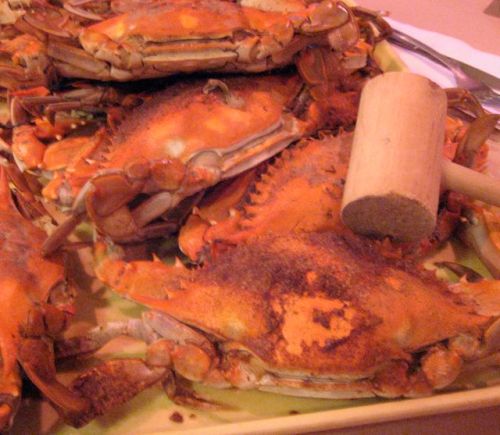
crabs

I have a bit of a cold so here’s a little something for you while I recover. I’ll post more about the Oxford Symposium soon.

I like the idea of posting a photo for contemplation; a bit of food zen if you will. This is a pile of crabs we had in August on Maryland’s Eastern Shore at Waterman’s Crab House.

Home, How Sweet It Is

CotswoldHouse

Coming home to Brooklyn is almost as good as traveling. Yesterday I went for a walk in the sunshine to combat my jet lag and was reminded once again why I love living here, It’s just so pleasant. I know that sounds like faint praise, but wandering through the brownstones on the last day of summer just can’t be beat.

The trip to the UK was fabulous, the highlight being the inspirational Oxford Symposium. I’ve got a headful of ideas and lots of new food geek friends from all over. In the coming days I’ll write more here about the Symposium and the presentations I attended.

The Cotswolds are just as beautiful as everyone says. Most of the buildings are made of a golden stone from local quarries, which when combined with a long late-summer twilight is magical. The food is great too; English cooking has come a long way. We had spectacular Thai in Oxford, elegant, yet relaxed gastropub fare in Sapperton near Cirencester and pitch perfect, contemporary seasonal cuisine at Allium in Fairford, Gloucestershire. All of this, when liberally doused with lots of delicious cask ales and ciders, adds up to the perfect vacation.

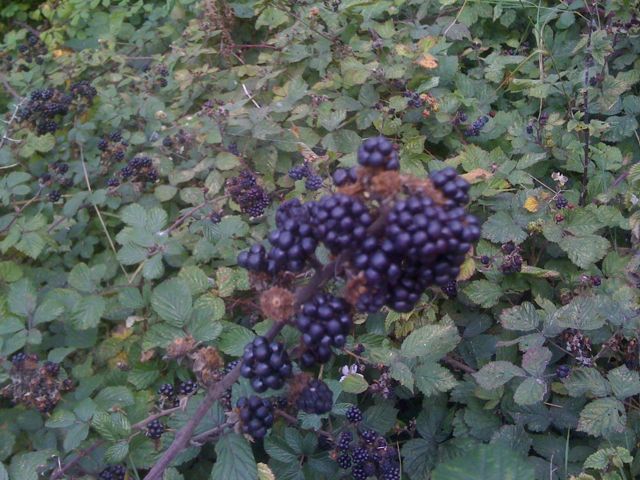
One of the things I’ve been enjoying most about The Cotswolds is the public footpaths. They are everywhere, taking you from village to village often through farmers’ fields. They were created from ancient traditional walking paths which according to English law must remain open to the public if it can be proven they have been used for a long time. Below is a photo of what we found yesterday while walking near Saintbury. Mmmmm…